Curating in the gaps: notes from Shanghai
Curator Jess Clifford travelled to Shanghai in April to undertake curatorial research centred on the 15th Shanghai Biennale. During her visit, she explored galleries and museums across the city, connecting with curators, gallerists and institutional colleagues. In this article, Jess reflects on her experience in Shanghai and shares insights into the curatorial approaches she encountered. Jess was supported to travel to Shanghai by a grant from the Foundation's Arts Experience Fund.

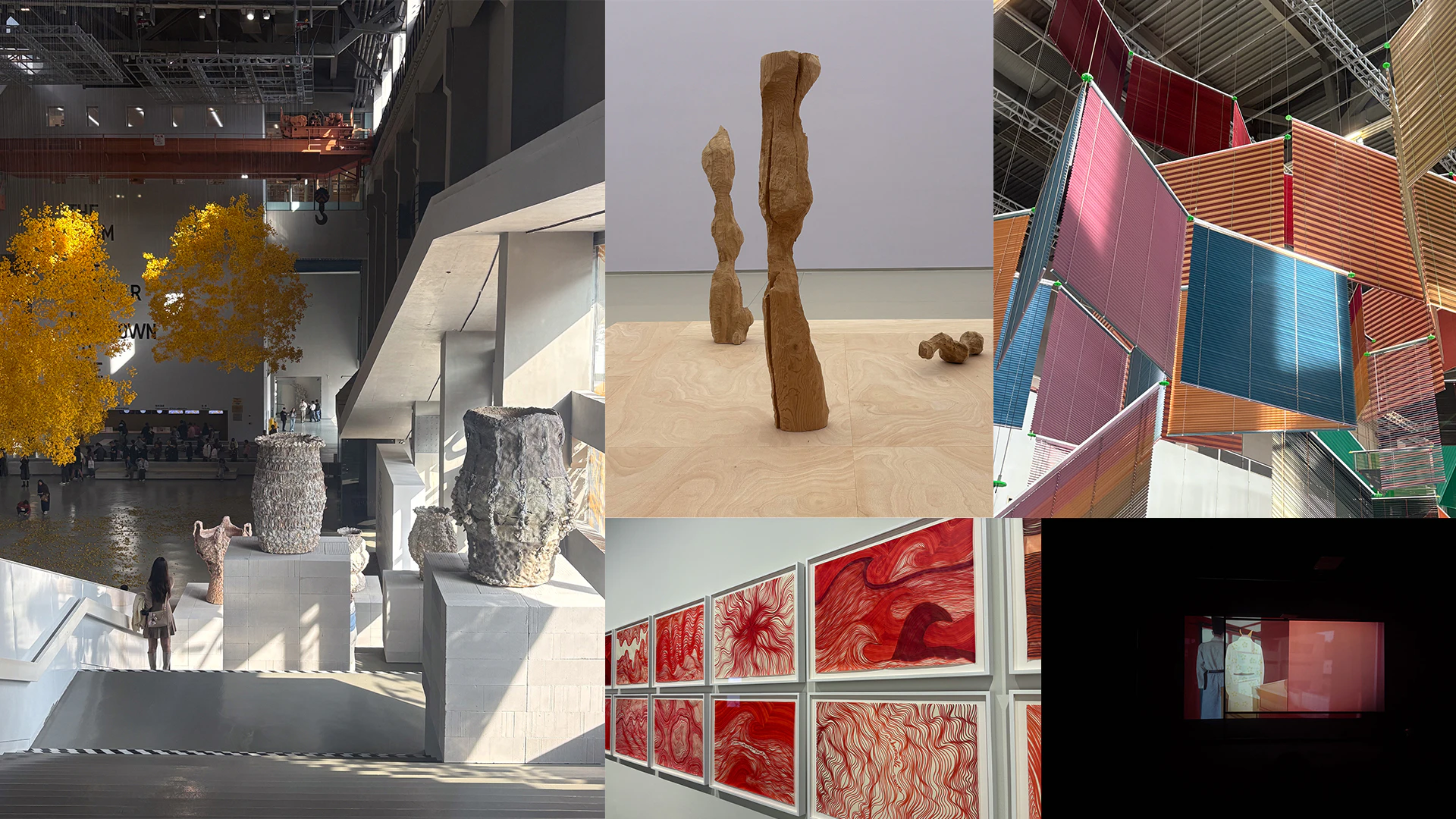
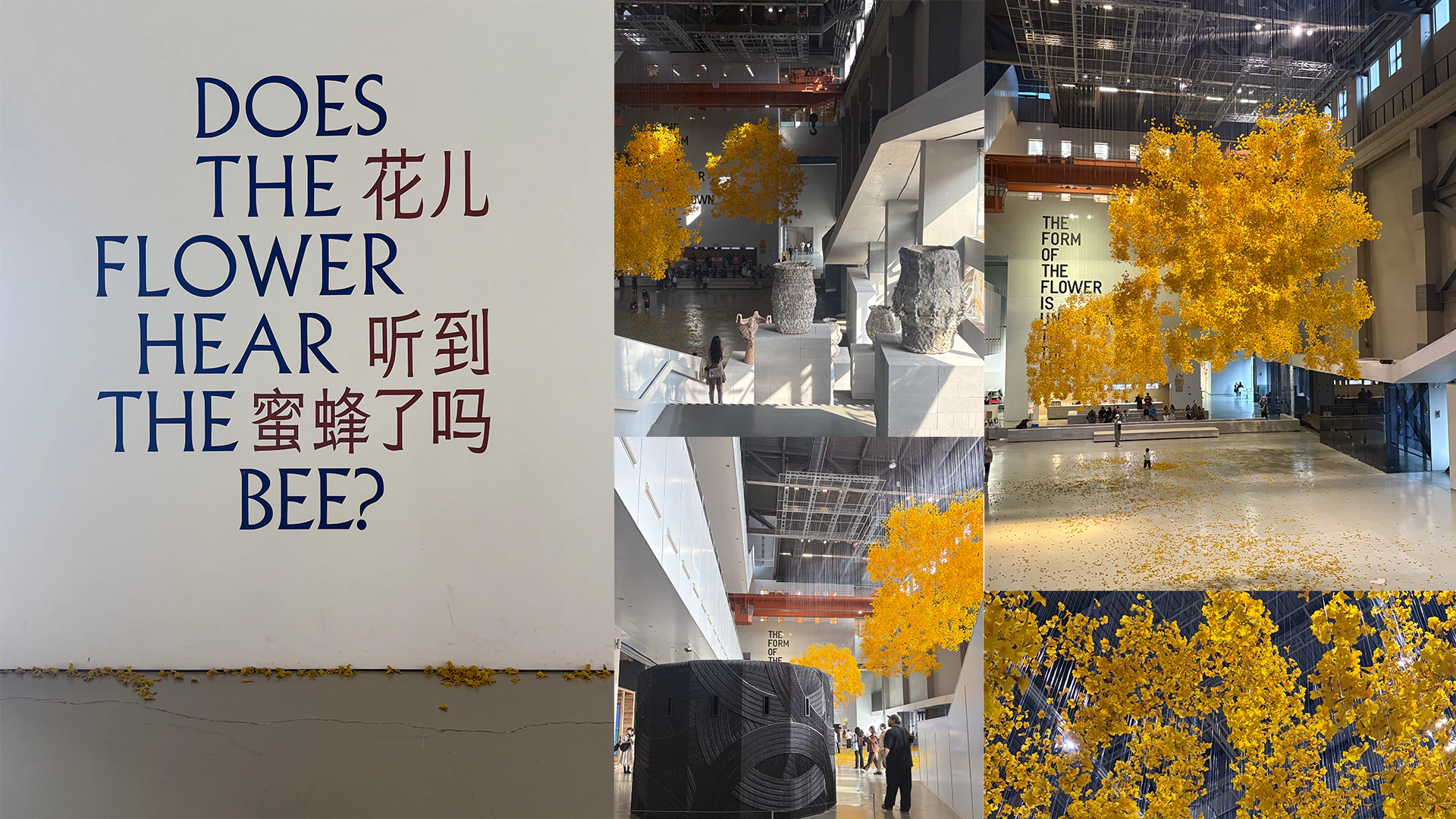
Jess's photos from the 15th Shanghai Biennale, with works by Masaomi Yasunaga, Allora and Calzadilla, Aki Inomata, Haegue Yang, Ho Tzu Nyen and Gözde Mimiko Türkkan
There is no shortage of contemporary art in Shanghai.
Over the course of a week, it was possible to move between major museums, commercial galleries, independent project spaces and artist talks almost continuously, each operating at a different scale and rhythm.
Supported by the Asia New Zealand Foundation Te Whītau Tūhono’s Arts Experience Fund, in April 2026, I travelled to Shanghai to undertake a focused programme of curatorial research and professional engagement, centred around attending the 15th Shanghai Biennale, and meeting with curators, gallerists and institutional colleagues.
Before arriving, I expected scale. Shanghai’s reputation as a cultural centre is tied closely to visibility: major museums, rapidly expanding arts infrastructure and an international-facing confidence that can feel very distant from Aotearoa New Zealand’s much smaller arts ecology.
What interested me most during my research trip was not simply the volume of activity, but the way contemporary art circulated through the city as both cultural infrastructure and social network—highly visible on the surface, but often dependent on personal connections and informal exchanges underneath.
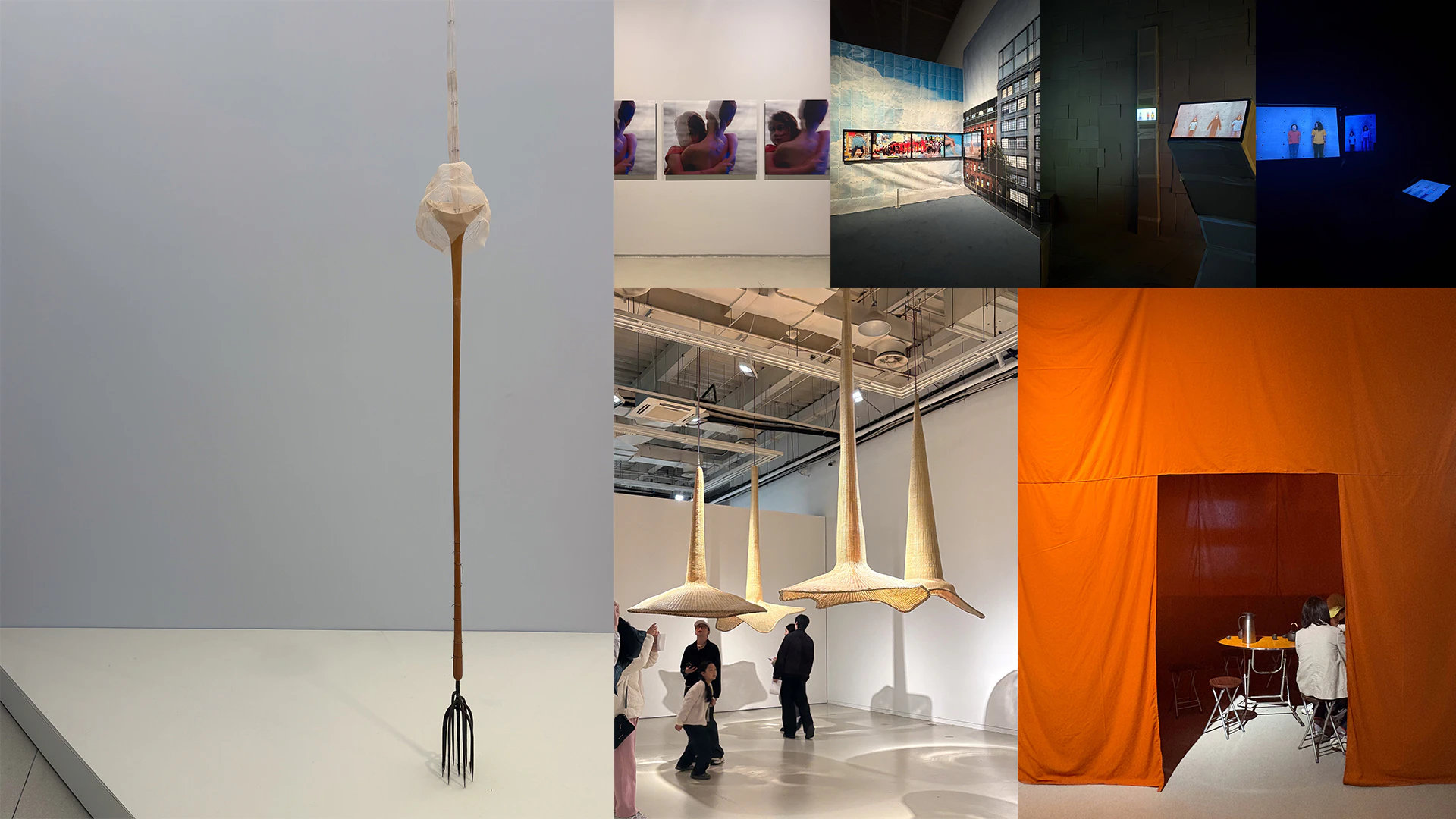
Jess's photos from the 15th Shanghai Biennale, with works by Hu Xiaoyuan, Shannon Te Ao, Sara Cwynar, Lina Lapelytė, Rirkrit Tiranvanija and Tania Candiani
The visit offered an opportunity to think through some ongoing questions in my own practice around curatorial authorship, institutional authenticity and how exhibitions produce meaning beyond individual artworks.
The Biennale, titled Does the Flower Hear the Bee and curated by Kitty Scott (Strategic Director at Fogo Island Arts, a residency and exhibition programme in the Newfoundland and Labrador region of Canada), immediately foregrounded some of those questions.
Staged at the Power Station of Art—the first state-owned contemporary art museum in mainland China, housed in a former power plant and converted into a contemporary art museum with much brio in 2012—the exhibition occupied a cavernous industrial building whose vast central hall and multiple floors of gallery space seemed designed for spectacle.
The architecture itself produces a particular kind of viewing experience: monumental, open-ended and, at times, physically overwhelming.
Does the Flower Hear the Bee matched that scale. It was ambitious and exceptionally well-produced, with large architectural interventions and technically complex installations spread throughout the building.
The exhibition Does the Flower Hear the Bee was staged at the Power Station of Art—a former power plant converted into a contemporary art museum. Works pictured are by Masaomi Yasunaga, Allora and Calzadilla and Brett Graham
But despite the confidence of the presentation, I often found myself struggling to locate a clear curatorial position within the exhibition itself.
Many of the works depended heavily on artists’ own explanations and contextual material, rather than the exhibition building a clear argument through its structure or juxtapositions.
That isn’t necessarily a failure, in the way that contemporary biennales increasingly operate as platforms rather than arguments, but it did make me reflect critically on the role curating plays within these large international exhibition formats—how exhibitions communicate ideas spatially, where interpretation sits and what happens when curatorial framing becomes too diffuse. The gaps were generative.
At the same time, the Biennale’s scale said something important about the visibility of contemporary art in Shanghai.
There is a level of institutional investment and public-facing ambition that feels markedly different from the context in Aotearoa New Zealand.
Contemporary art occupies physical and cultural space in a way that signals confidence, even when the ideas themselves remain unresolved or contradictory.
Some of the most rewarding experiences of the trip came through smaller conversations and recommendations that expanded my understanding of the city beyond its major institutions.
At Rockbund Art Museum, I visited Peng Zuqiang’s solo exhibition Short-term Histories, which worked on a much quieter frequency.
Through film and installation, the exhibition traced unstable personal and political histories without forcing them into resolution.
Compared with the density and spectacle of the Biennale, Peng’s work felt restrained and precise.
This also led to a valuable connection with Shanghainese curator Sam Shiyi Qian, who generously shared a targeted list of local galleries, institutions and project spaces to visit.
That guidance shifted the direction of my trip considerably. Instead of understanding Shanghai primarily through its flagship museums and biennale infrastructure, I began to see a broader ecosystem made up of smaller organisations, experimental programmes and locally embedded initiatives.
What emerged across these visits was a sense that Shanghai’s art scene is defined less by a singular identity than by overlapping and sometimes competing frameworks: commercial expansion, institutional internationalism, artist-led experimentation and rapidly shifting urban development.

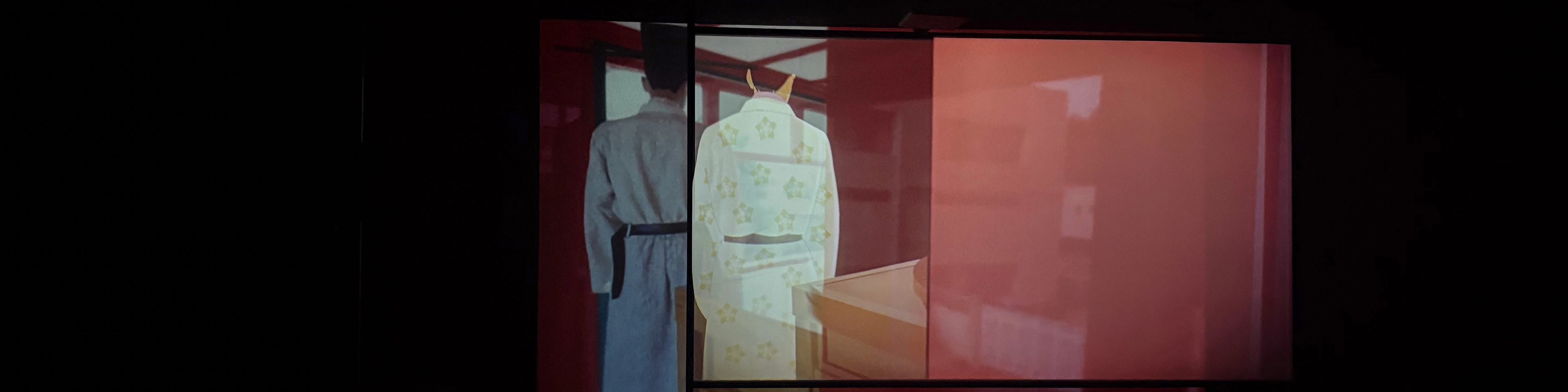
A selection of Jess's photos from Peng Zuqiang's solo show Short-term Histories at Rockbund Art Museum, curated by Sam Shiyi Qian
Different spaces positioned themselves very differently within those dynamics, but there was a consistent sense of activity and openness to exchange.
By coincidence, my visit also overlapped with a symposium connected to Rockbund’s exhibition The Great Camouflage, curated by director X Zhu-Nowell and artist Kandis Williams.
Hearing directly from participating artists including Renée Green and Euridice Zaituna Kala added another dimension to the exhibition, particularly around ideas of transnational conversation and institutional self-reflexivity.
What I ultimately took from the trip was not a singular model of curatorial practice, but a sharpened awareness of contradiction. Shanghai’s contemporary art infrastructure projects scale, speed and visibility, but some of the most thoughtful and generative experiences happened in smaller conversations, temporary spaces and less resolved contexts.
The trip reinforced for me that exhibitions are not only containers for artworks; they are also ways of organising relationships, attention and public discourse. More than any individual exhibition, it was the density of those overlapping encounters—institutional, independent, formal and informal—that made the research valuable.
Shanghai felt less like a stable art world centre than a city in constant negotiation with what contemporary art can be and who it is for.
The Foundation's arts programme brings Asia into the mainstream of New Zealand arts by inspiring New Zealand arts professionals to grow their connections and knowledge of Asia. It also supports the presentation of Asian arts in partnership with New Zealand arts organisations and events.
The Arts Experience Fund (formerly Art Practitioners Fund) supports self-directed opportunities for New Zealand-based arts practitioners to build meaningful artistic and professional connections in Asia. This can include residencies, research tours, work placements and exchanges.