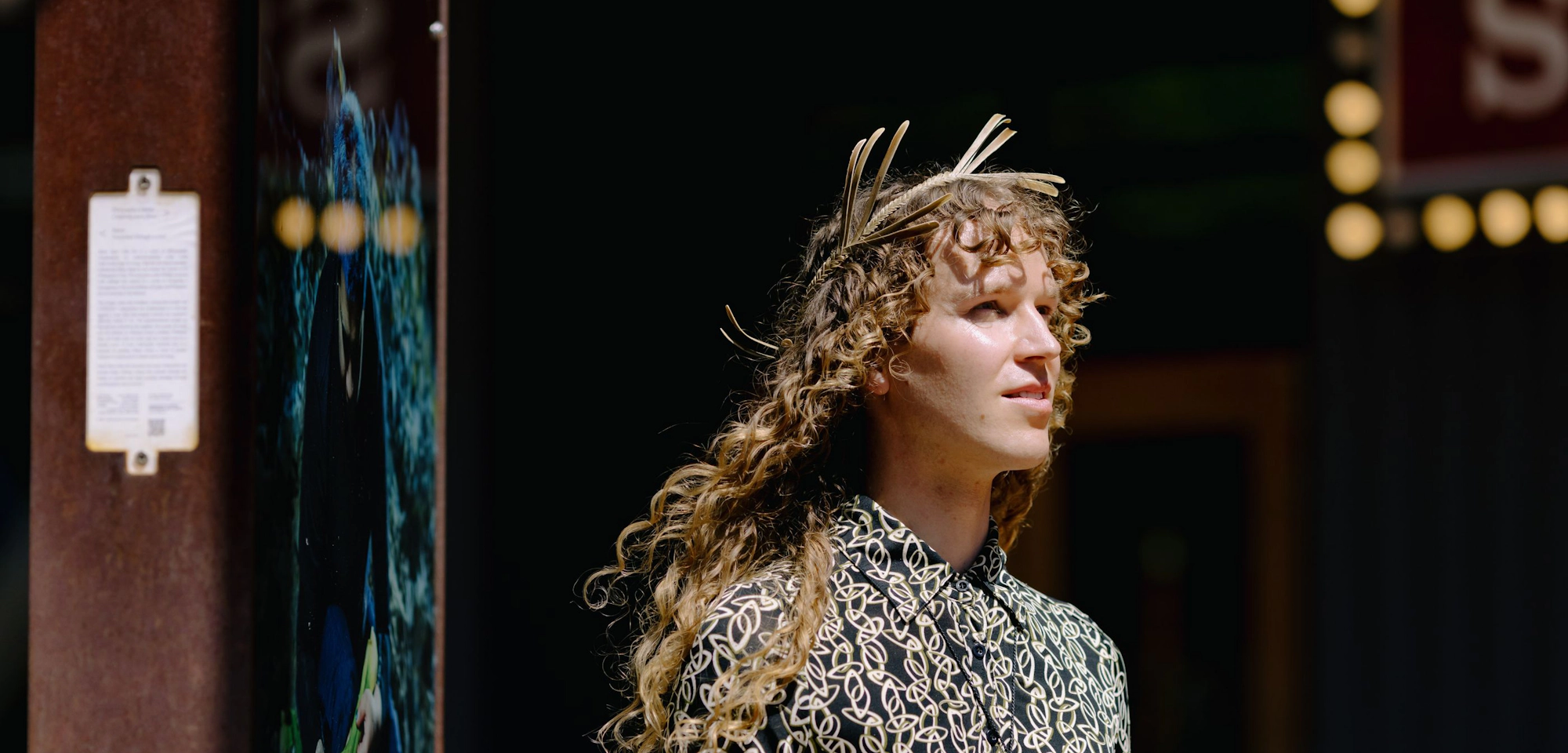
Serendipity takes centre stage — NZ performing-arts leaders tour India
We chat with Moss Te Ururangi Patterson, artistic and executive director of The New Zealand Dance Company, about visiting India as part of a Foundation delegation of six performing arts leaders. Travelling to Mumbai and Goa, the group explored how performing arts are created and delivered, forged new industry connections and immersed themselves in the energy and ideas of the Serendipity Arts Festival.


Moss taking part in a panel discussion at Serendipity Arts Festival on rethinking power in the arts
What was it about this opportunity that piqued your interest?
I was really drawn to the chance to immerse myself in India’s arts scene and connect with artists and cultural leaders there.
As a Māori artist, dancer and choreographer from Aotearoa New Zealand, and as artistic director of the New Zealand Dance Company, I’m always looking for ways to bring fresh ideas back home and see how our own stories and movements might resonate in a global context. There’s something really exciting about connecting across cultures.
Whanaungatanga is super important to me, and I love seeing what creative sparks can emerge when different perspectives and cultural ideas come together.
What were your impressions of India?


Moss: " I was struck straight away by the energy, the colours, and the movement of both cities."
This was my first time in India. Landing in Mumbai and then travelling to Goa, I was struck straight away by the energy, the colours, and the movement of both cities. Everything felt alive and intense.
At first it was a lot to take in, almost overwhelming, but then you start to notice the subtler rhythms — the way people move, how communities gather, and how music and performance flow through everyday life.
By the end of the trip, I felt a real connection, like I was starting to understand the heartbeat of India in my own personal way.
I met some amazing artists and was hosted so beautifully by the Serendipity Arts Festival staff, Aaron Fernandes, and Craig Cooper from Asia New Zealand, which made the experience really personal and welcoming.

The group visited cultural sites, galleries and performing arts spaces
Can you describe the Serendipity Arts Festival and what made it so special??
Serendipity was incredible. The festival is alive with manaakitanga, ideas, dialogue, and performance.
It’s a space where artists, programmers, and audiences are all moving together, experimenting and sharing stories. The atmosphere is open and curious, and you feel encouraged to explore and ask questions.
Conversations ranged from the very traditional to the cutting edge, and everywhere you looked there was a kind of joy and respect for creativity. It reminded me of how we try to make our performances in New Zealand feel, with manaakitanga at the heart of everything we do.


Moss: "The festival is alive with manaakitanga, ideas, dialogue, and performance."
I also participated in a Serendipity Exchange for the Arts panel, talking about equity, belonging, and rethinking power in the arts. It was a fascinating exchange, and I felt honoured to speak on behalf of my experiences in Aotearoa New Zealand.
It really showed me how powerful travel and connection can be. Without this trip, the possibility of creating a collaboration would not even exist, and I am now planning towards a return to India later this year with our team.
Who were some of the more fascinating people you met?
Meeting the founder, Mr Sunil Munjal, was a real highlight and a real honour. He told the story of how the festival started, inspired by a bookshop his late wife used to run where people would meet serendipitously and go on to form lifelong friendships.
I connected with choreographic artist Mayuri Upadhya, and seeing her work being presented was so inspiring. Talking with her really sparked ideas about cross-cultural collaboration and how movement and story can cross boundaries while respecting each culture. It reminded me of how we work at NZDC, bringing together different voices, ideas, and stories in a way that feels authentic and meaningful.
What was the most valuable aspect of the trip?

Moss says the most valuable aspect of the trip was the interesting people he met and connections he made
For me, it was definitely about connecting with the people who make the arts happen in India and beyond — meeting artists, yes, but also venue managers, CEOs, arts producers, programmers, production teams, and festival directors from across the world.
Experiencing that mix of people and perspectives is an essential ingredient for fostering deep cultural understanding, and it also positions me in my role as artistic director to explore business relationships, ways we can exchange ideas, and create meaningful, long-lasting collaborations between our cultures and countries.
Being able to see how these leaders and practitioners operate, and to have open, generous conversations with them, was incredibly valuable. It gave me a clearer picture of how the arts ecosystem works in India, and how international partnerships can be nurtured thoughtfully.
At the same time, I still got to experience the art itself — watching a rehearsal and performance of a collaborative dance work with artists from Europe and Goa was full of energy. Contemporary dance meeting traditional storytelling reminded me how innovation can sit alongside respect for culture and place.
All of this sparked ideas for NZDC and inspired me to start developing some projects with artists from the festival for future collaboration.
What was it like travelling with fellow performing arts leaders?


Moss says travelling with a group of performing arts programmers was being part of "a mobile think tank"
Travelling with other leaders was awesome. There was a lot of kōrero on the plane, in studios, over kai. It felt like a mobile think tank.
Sharing experiences and reflecting together added another layer to what we were seeing and learning. It reminded me that in this work, connection with your peers is just as important as the work itself. It’s what I call kotahitanga in action.
Why are visits like these important for your work?
These trips are literally taonga. They expand your experiences in ways you will never forget, you see things from completely different perspectives, they challenge assumptions, and they inspire new ideas. They build relationships that can become creative partnerships, and they help you reflect on your own practice. For NZDC, they strengthen the way we work with artists locally and internationally, and they keep our mahi fresh and connected to the world.
The Foundation's arts programme brings Asia into the mainstream of New Zealand arts by inspiring New Zealand arts professionals to grow their connections and knowledge of Asia. It also supports the presentation of Asian arts in partnership with New Zealand arts organisations and events.
The Arts Delegation Programme supports New Zealand arts decision-makers to build meaningful, long-term relationships with key organisations and events across Asia.